How to Store Research Peptides: Best Practices for Stability
Peptide stability is a practical research concern that directly affects data validity. A degraded peptide produces different results than an intact one, and some degradation products can introduce confounding variables into research. Understanding how to store peptides correctly from the moment they arrive is fundamental to responsible research practice.
Why Peptides Degrade
Peptides are relatively fragile compared to small molecule drugs. They can degrade through several mechanisms: hydrolysis (water breaks peptide bonds), oxidation (particularly affecting methionine, cysteine, and tryptophan residues), aggregation (peptides cluster together and become inactive), and enzymatic cleavage if biological contaminants are present. Temperature, moisture, light, and pH all affect how quickly these processes occur. Research-grade peptides are typically shipped and supplied in a lyophilized (freeze-dried) form precisely because removing water dramatically slows most degradation pathways.
Storage for Lyophilized (Freeze-Dried) Peptides
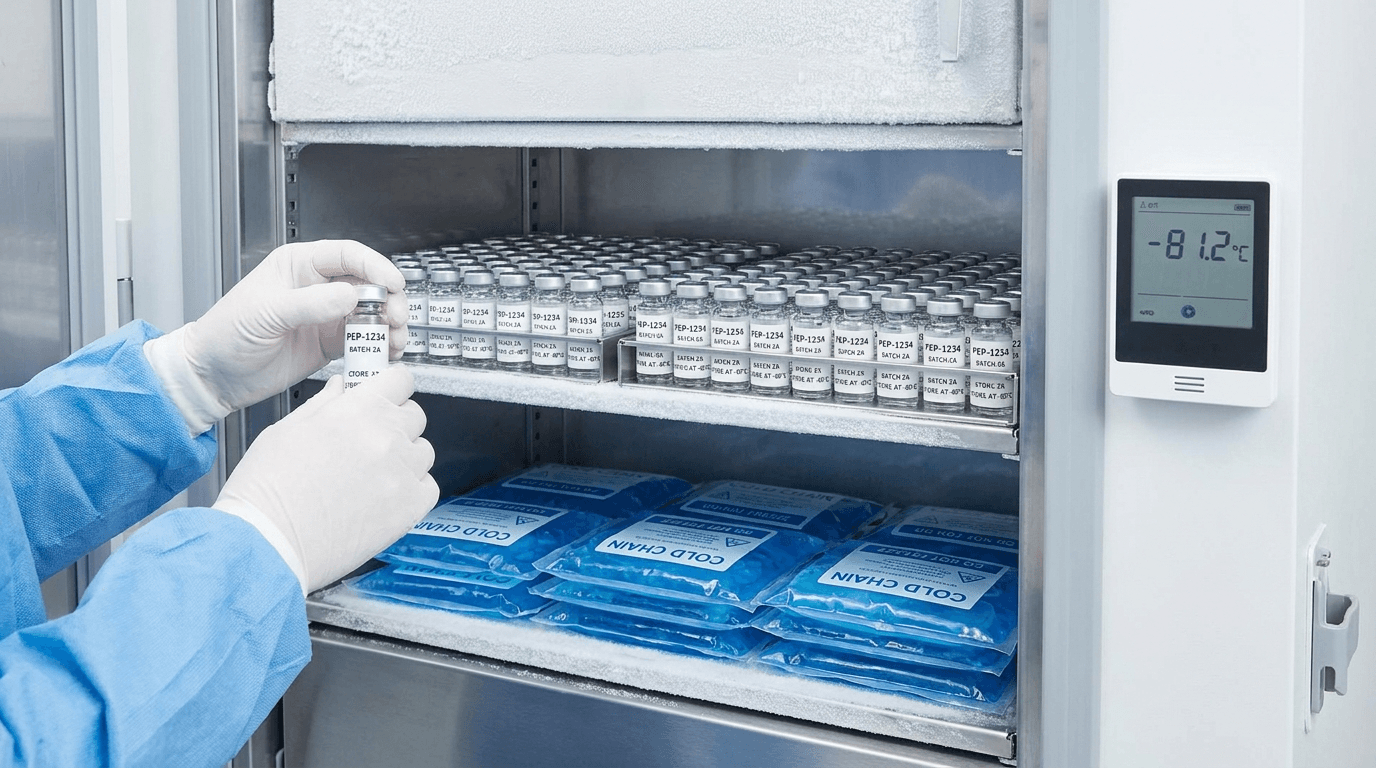
Lyophilized peptides should be stored at below freezing temperatures for long-term storage. Most research peptides are stable for months to years when stored at minus 20 degrees Celsius in a standard laboratory freezer. For periods longer than one to two years, minus 80 degrees Celsius provides greater stability. Light exposure should be minimized: amber vials or storage in dark conditions reduce photodegradation. Vials should not be repeatedly freeze-thawed, as each cycle introduces moisture and mechanical stress that accelerates degradation.
A common mistake is storing lyophilized peptides in a standard refrigerator at 4 degrees Celsius for extended periods. While some peptides tolerate this for short durations, freezer storage is always preferred for anything beyond days to weeks.
Reconstitution: What to Use and What to Avoid
Reconstitution converts the lyophilized powder into a solution for use. The choice of solvent matters for both stability and safety. Bacteriostatic water (sterile water with 0.9% benzyl alcohol) is the most common reconstitution solvent for research peptides and is preferred over plain sterile water because the benzyl alcohol inhibits bacterial growth, extending the shelf life of the reconstituted solution. Plain sterile water can be used but the reconstituted solution should be used more quickly.
Some peptides require a small amount of acetic acid (dilute, typically 0.1%) or DMSO to go into solution. The specific peptide's documentation or COA should specify if non-standard solvents are needed. Adding the solvent slowly along the side of the vial and allowing the powder to dissolve without vigorous shaking prevents aggregation.
Storage for Reconstituted Peptides
Once reconstituted, peptides should be stored at 4 degrees Celsius (standard refrigerator) and used within a defined window, typically 4 to 6 weeks for bacteriostatic water preparations. Reconstituted solutions should not be frozen: freezing breaks down the solution and may denature the peptide. Multiple small vials are preferable to one large vial to minimize the number of times a single vial is accessed and exposed to air.
Reconstituted solutions should be protected from light. Covering vials with foil or storing in a dark container reduces photodegradation. Label each vial with the reconstitution date to track the storage window.
Signs of Peptide Degradation
Visible signs that a peptide solution may be degraded include cloudiness or particulate matter (suggesting aggregation or contamination), unusual color changes, and visible precipitate. However, many forms of degradation are not visible to the naked eye, which is why adherence to storage protocols is more reliable than visual inspection alone. If a compound has been stored incorrectly, the appropriate research response is to discard it and source a fresh vial rather than assume it is still viable.
Sourcing from Suppliers Who Prioritize Stability
Research-grade peptide suppliers who prioritize quality typically ship lyophilized compounds with cold packs to maintain appropriate temperatures during transit. They provide clear reconstitution instructions and COA documentation. Werner Science ships and stores peptides to research-grade standards. Browse their catalog at wernerscience.com/?ref=bwmucbwp and use code SAVE10 for a discount on your research order.
Research-Grade Peptides from a Verified Supplier
Werner Science provides high-purity research peptides with third-party testing and fast shipping. Trusted by researchers worldwide.
Browse Werner Science →Get the Free Peptide Handbook
15+ research compounds explained in plain English. Delivered instantly to your inbox.
No spam. Unsubscribe anytime.
Related Articles
All content on this site is for educational and informational purposes only and does not constitute medical advice. Consult a qualified healthcare professional before making any health decisions.