Nutrition Protocols That Support Retatrutide Research
What you eat during a Retatrutide research window directly affects the quality of your outcomes data. Here is how experienced researchers approach the nutritional framework.
The Protein-First Principle Applies Here More Than Anywhere
Retatrutide produces significant appetite suppression, more pronounced than prior generation compounds, consistent with its stronger GLP-1 component. Researchers studying body composition outcomes have found that this creates a specific challenge: caloric intake drops substantially, and if the remaining intake is not protein-dense, lean mass loss accelerates.
Body composition research with triple receptor agonists shows roughly 25 to 40% of mass reduction can be lean tissue when protein intake is not managed. That meaningfully affects the quality of your research data, and it affects the physical state of the research subject.
Targeting 1.0 to 1.2 grams of protein per pound of target body weight is the guideline most consistently cited in researcher documentation. The challenge is maintaining that intake when appetite is significantly suppressed, which is why researchers typically structure meal timing actively rather than relying on hunger cues.
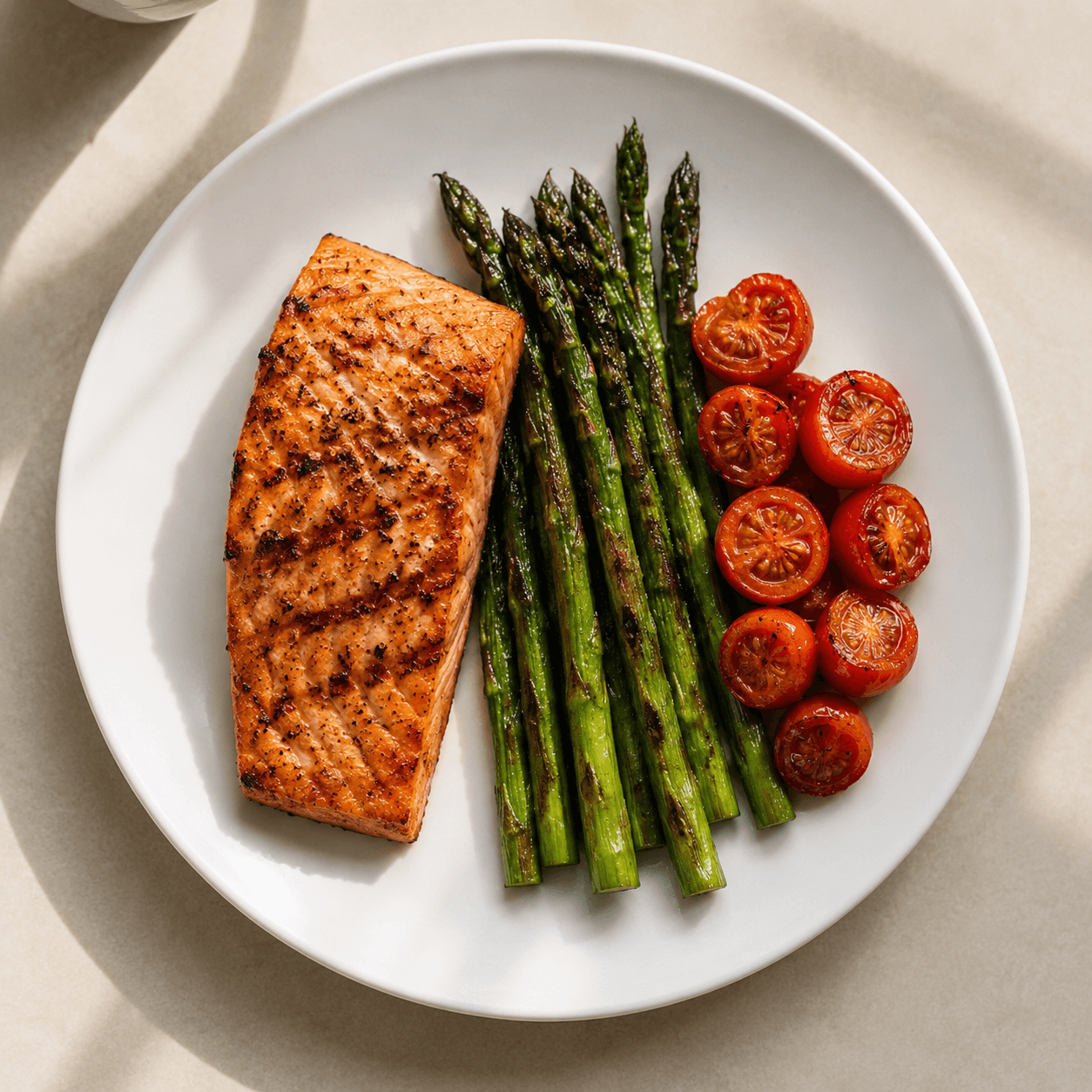
Foods That Support Active Research Protocols
Prioritized by importance to Retatrutide research outcomes.
Lean Proteins
CriticalChicken breast, fish, Greek yogurt, eggs, cottage cheese, tofu, legumes
The most critical variable in Retatrutide research. As caloric intake decreases due to appetite suppression, protein intake must be intentionally maintained. Researchers who do not prioritize protein consistently document greater lean mass loss relative to fat loss, which confounds body composition data.
Non-Starchy Vegetables
HighSpinach, broccoli, cauliflower, zucchini, cucumber, bell peppers
High fiber, high micronutrient density, low caloric load. Important during research windows when total intake is suppressed. These foods ensure nutritional coverage without overwhelming GI tolerance.
Complex Carbohydrates
ModerateOats, quinoa, brown rice, whole wheat
Provides sustained energy during research windows when appetite suppression makes large meals uncomfortable. Fiber content supports GI regularity, which is relevant given the motility effects of GLP-1 receptor activation.
Hydrating Foods and Fluids
ModerateCucumber, broths, herbal teas, electrolyte drinks
Glucagon receptor activation in Retatrutide increases energy expenditure. Researchers pairing this with reduced caloric intake should be attentive to hydration, particularly in warmer conditions or during physical activity.
Werner Science carries Retatrutide, GLOW, and SEMTEX with verified purity documentation. View the full catalog for compound specifications before beginning your protocol.
View Research Compounds →Foods That Interfere With Research Protocols
These do not invalidate research, but they consistently introduce noise into results and increase GI discomfort during active dosing phases.
GLP-1 receptor activation slows gastric emptying. High-fat foods slow it further. The combination during active research dosing is the most consistent source of GI discomfort researchers report.
Bloating and gas are more pronounced during active receptor agonist research. Carbonation amplifies this.
Researchers consistently note increased alcohol sensitivity during peptide research. Beyond the data integrity issue, alcohol interferes with fat metabolism pathways that are active research targets.
Counterproductive to the metabolic research objectives. Blood sugar volatility runs counter to the glucose-stabilizing mechanisms that GLP-1 and GIP receptor activation are specifically targeting.
Gastric emptying is significantly slowed during Retatrutide research. Researchers who shift to smaller, more frequent intake patterns consistently report better GI tolerance throughout the protocol.
When Appetite Is Suppressed
Retatrutide's appetite suppression can be strong enough that researchers have to remind themselves to eat. This is a data integrity issue as much as a comfort one. Consistent under-eating creates confounds that make it difficult to isolate compound effects from caloric restriction effects.
Sample Research Protocol Day
| Timing | Intake | Protocol Rationale |
|---|---|---|
| Morning | Greek yogurt with berries + two soft-boiled eggs | High protein, low fat, easy on the stomach |
| Midday | Grilled chicken or fish over spinach, cucumber, light dressing | Protein-forward, no heavy fats, manageable volume |
| Evening | Baked salmon, roasted zucchini, half cup quinoa | Omega-3s, complete protein, fiber for regularity |
| Supplemental | Protein shake or cottage cheese if intake has been low | Use when appetite suppression makes hitting protein targets difficult |
Ready to Explore the Research?
Retatrutide, GLOW, and SEMTEX are available through Werner Science. View the full peptide catalog for compound specifications, purity documentation, and current availability.
Shop Werner Science →Use code SAVE10 at checkout for 10% off.