
What Are Peptides? A Beginner's Complete Guide
If you've been seeing the word "peptides" everywhere lately (in wellness articles, research forums, fitness communities) you're not imagining it. Peptides have become one of the most studied compounds in modern health research. But what are peptides, exactly? This guide breaks it down from the beginning.
What Exactly Is a Peptide?
A peptide is a short chain of amino acids, the same building blocks that make up proteins. The difference between a peptide and a protein is mostly size. Proteins are long, complex chains. Peptides are shorter, typically made up of anywhere from two to fifty amino acids linked together.
Your body already produces hundreds of peptides naturally. Insulin is a peptide. So are many of the hormones your body uses to regulate everything from growth to hunger to sleep. Peptides are not foreign substances. They are a fundamental part of how the body communicates with itself.
How Do Peptides Work in the Body?
Peptides work by acting as signaling molecules. They bind to specific receptors on cells and trigger a response. Think of it like a key and a lock. Each peptide has a specific shape that fits a specific receptor, and when it binds, it tells the cell to do something.
Different peptides trigger different responses. Some signal the body to produce more growth hormone. Some regulate appetite. Some play a role in tissue repair. The specificity of peptides is part of what makes them so interesting to researchers. A peptide that targets one receptor generally does not interfere with others.
What Are the Different Types of Peptides?
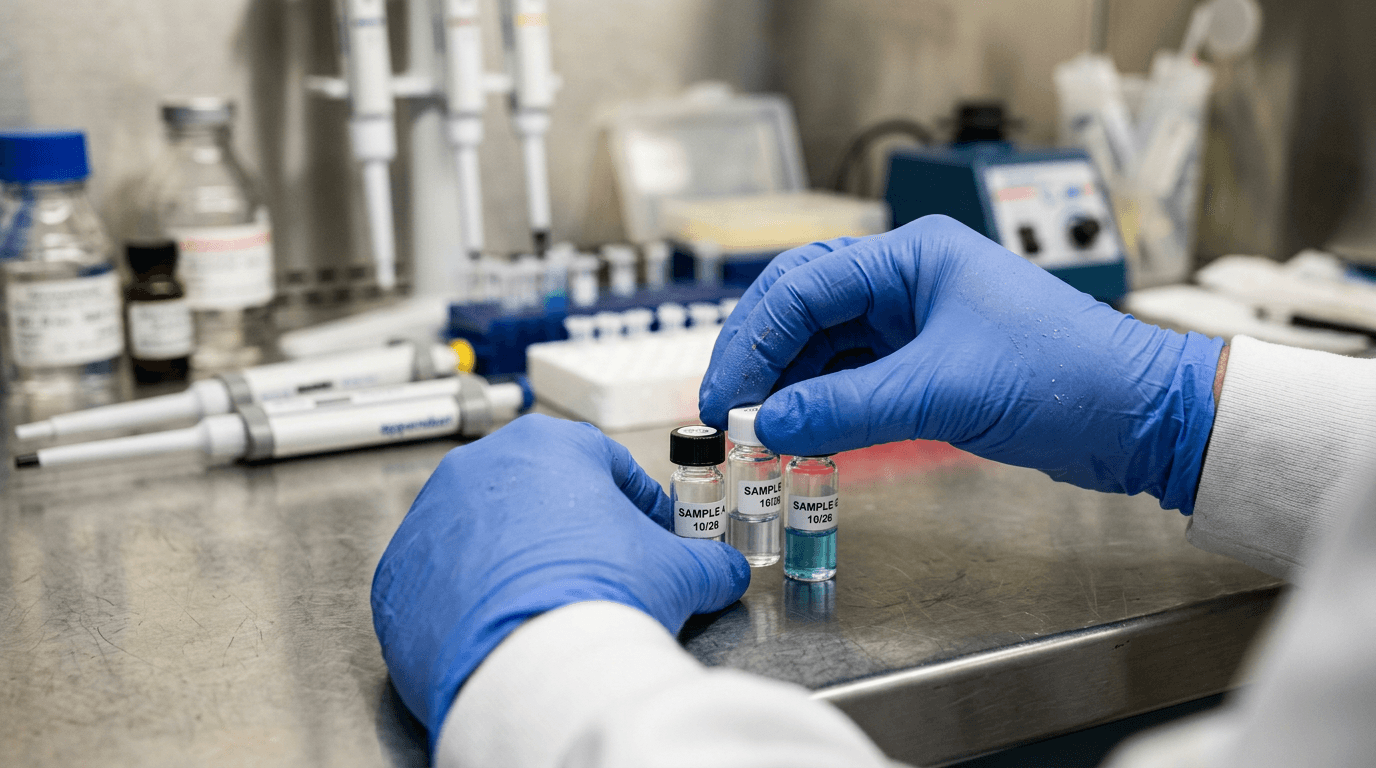
Peptides are typically categorized by what they do. Growth hormone secretagogues stimulate the release of growth hormone. GLP-1 receptor agonists influence appetite and blood sugar regulation. Healing peptides like BPC-157 are studied for their role in tissue and gut repair. Melanocyte-stimulating peptides affect pigmentation and other processes. Research into each of these categories has expanded significantly over the past decade.
Are Peptides Safe?
Peptides that the body produces naturally are, by definition, part of normal physiology. Synthetic peptides designed for research purposes vary widely. Some have extensive safety data from clinical trials, others are much earlier in the research process. Safety profiles depend heavily on the specific compound, the source, and how it is handled. This is why sourcing from verified research suppliers matters.
Peptides vs. Proteins: What Is the Difference?
The line between peptides and proteins is technically defined by length. Peptides have fewer than fifty amino acids. Proteins have more. In practice, peptides are smaller, more targeted, and often easier for the body to absorb and utilize than full proteins. Many peptides are derived from proteins through natural or synthetic processes.
Where Researchers Source Peptides
For research purposes, verified suppliers like Werner Science provide high-purity peptide compounds. If you're looking for research-grade peptides, Werner Science is a trusted source. Browse their full catalog at wernerscience.com/?ref=bwmucbwp
Research-Grade Peptides from a Verified Supplier
Werner Science provides high-purity research peptides with third-party testing and fast shipping. Trusted by researchers worldwide.
Browse Werner Science →Get the Free Peptide Handbook
15+ research compounds explained in plain English. Delivered instantly to your inbox.
No spam. Unsubscribe anytime.
Related Articles
All content on this site is for educational and informational purposes only and does not constitute medical advice. Consult a qualified healthcare professional before making any health decisions.