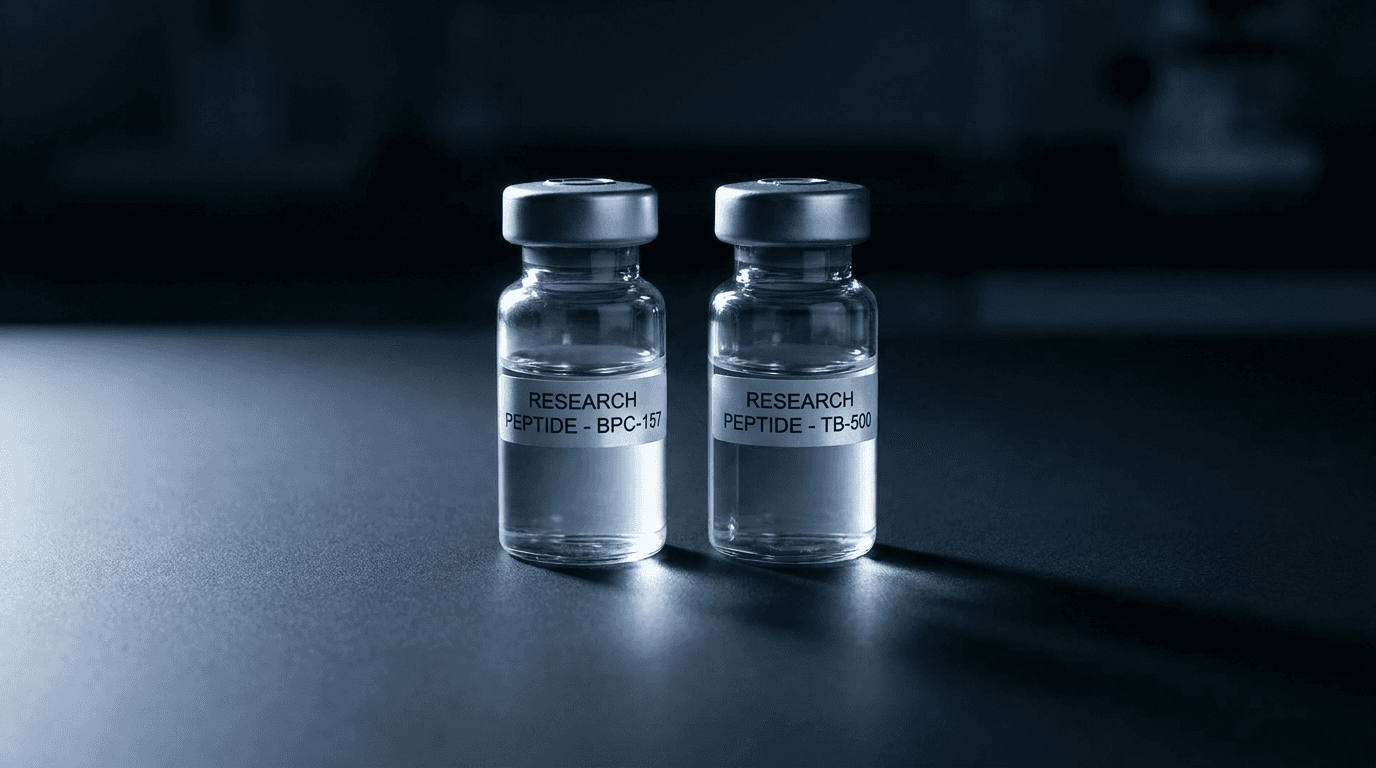
BPC-157 vs. TB-500: How These Two Healing Peptides Compare
BPC-157 and TB-500 are often mentioned together in research discussions because they are both studied for tissue repair, healing, and inflammation. Researchers frequently ask whether they are interchangeable, additive, or redundant. The answer lies in their mechanisms, which are distinct despite the overlap in studied outcomes.
BPC-157: Mechanism and Research Focus
BPC-157 (Body Protection Compound 157) is a synthetic pentadecapeptide derived from a protein found in gastric juice. Its mechanisms include stimulation of angiogenesis (new blood vessel formation), interaction with the nitric oxide system, and influence on growth factor receptors including VEGF and EGF pathways. It has been extensively studied in animal models for gut healing, tendon and ligament repair, muscle recovery, and bone healing.
The gut health applications have the most preclinical research support: hundreds of published studies in animal models showing accelerated healing of gastric ulcers, intestinal damage, and inflammatory bowel conditions. BPC-157's origin from a gastric protein likely explains why this application has the richest research base.
TB-500: Mechanism and Research Focus
TB-500 is a fragment of thymosin beta-4 (specifically the LKKTETQ sequence) that is responsible for actin-binding activity. Its primary mechanism involves promoting cell migration, particularly of endothelial cells and keratinocytes, through actin regulation. It also promotes new blood vessel formation and has anti-inflammatory properties. Research has studied it for cardiac tissue repair, wound healing, muscle injury recovery, and neurological applications.
TB-500's strongest preclinical research is in cardiac applications, where thymosin beta-4 and its fragments have been shown to promote survival and migration of cardiac progenitor cells after ischemic injury. This is a different research application emphasis than BPC-157, which is most studied for gut and musculoskeletal repair.
Where Their Research Overlaps
Both compounds have been studied for muscle injury recovery, tendon healing, and inflammation reduction. In these overlapping applications, the mechanisms differ: BPC-157 works primarily through nitric oxide and vascular growth factors, while TB-500 works through actin dynamics and cell migration. The outcomes in animal models (accelerated healing, reduced scar formation, reduced inflammation) are similar, even though the paths are different.
This mechanistic distinction is precisely why some researchers study the two in combination. If the pathways are independent and additive, combining them could produce greater healing effects than either alone. Several animal studies have investigated this directly, with results generally supporting additive or synergistic effects in musculoskeletal injury models.
Head-to-Head Research Comparisons
Direct head-to-head comparisons of BPC-157 and TB-500 in the same injury models are limited. Most research studies each compound independently. Where comparisons exist, they tend to show comparable efficacy in musculoskeletal applications, with differences in the specific cellular mechanisms activated. Neither compound has been established as universally superior to the other across all healing applications.
What Human Data Exists
Human data for both compounds is limited. BPC-157 and TB-500 have not completed large-scale human clinical trials for any indication. Thymosin beta-4 (the full peptide from which TB-500 is derived) has been in human trials for wound healing and ophthalmic applications with some positive results. The preclinical evidence for both is strong, but human translation is the primary research gap.
Choosing Between Them for Research
For research focused specifically on gut health, BPC-157 is the more studied compound in that application. For research focused on cardiac or broader tissue repair, TB-500 has more specific research in those areas. For musculoskeletal healing research, both are viable and some protocols use them in combination to study additive effects.
Werner Science carries research-grade BPC-157 and TB-500. Browse their catalog at wernerscience.com/?ref=bwmucbwp and use code SAVE10 for a discount.
Research-Grade Peptides from a Verified Supplier
Werner Science provides high-purity research peptides with third-party testing and fast shipping. Trusted by researchers worldwide.
Browse Werner Science →Get the Free Peptide Handbook
15+ research compounds explained in plain English. Delivered instantly to your inbox.
No spam. Unsubscribe anytime.
Related Articles
All content on this site is for educational and informational purposes only and does not constitute medical advice. Consult a qualified healthcare professional before making any health decisions.